
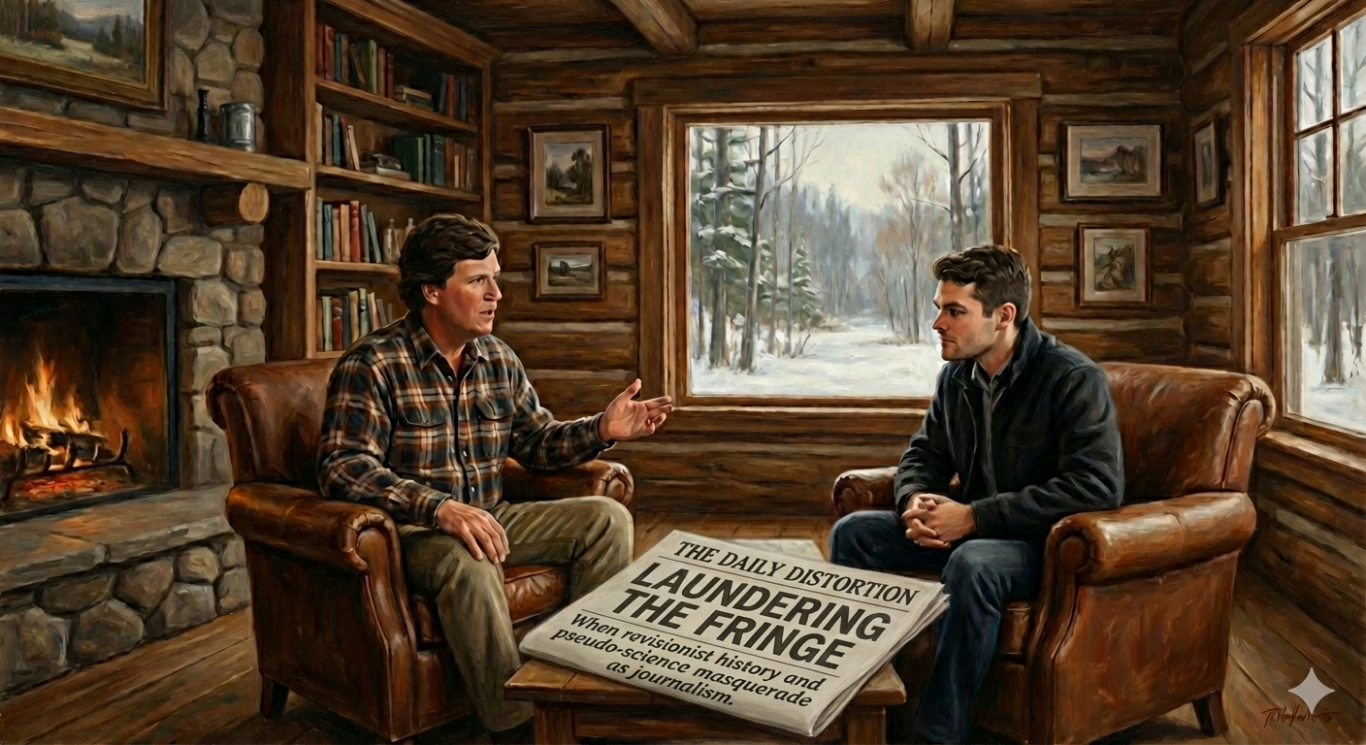
The Woke Right: Exposing Pseudo-Intellectualism
An examination of the rising tide of identity politics within right-wing circles. These articles critique the shift away from principled conservatism toward tribalism, exposing the rhetorical contradictions and "pseudo-intellectual" arguments defining the modern movement.
Profanity as Patriotism: Why the New Right’s "Freedom of Speech" Violates the Tradition It Defends
The contemporary landscape of American conservatism, particularly as it manifests in the high-velocity ecosystem of digital media, is currently undergoing a profound and largely unacknowledged philosophical schizophrenia. On the surface, the movement appears united by a shared lexicon of "freedom," "tradition," "anti-wokeness," and "patriotism." Yet, beneath this veneer of political solidarity lies a deep, tectonic fracture concerning the very nature of human agency and the definition of liberty itself.
One Humanity: Against Racial Realism
In recent years, a new—yet old—ideology has begun to take root in corners of the political and theological Right. Often called "Racial Realism" or "Ancestral Essentialism," it argues that humanity is not just a collection of cultures, but a series of fixed, biological "kinds" intended to remain separate. Proponents of this view often point to the biblical account of Noah’s sons—Shem, Ham, and Japheth—as the divine blueprint for this separation. They argue that these three men founded three distinct, "pure" lineages that define our ethnic boundaries today. But does this theory hold up?
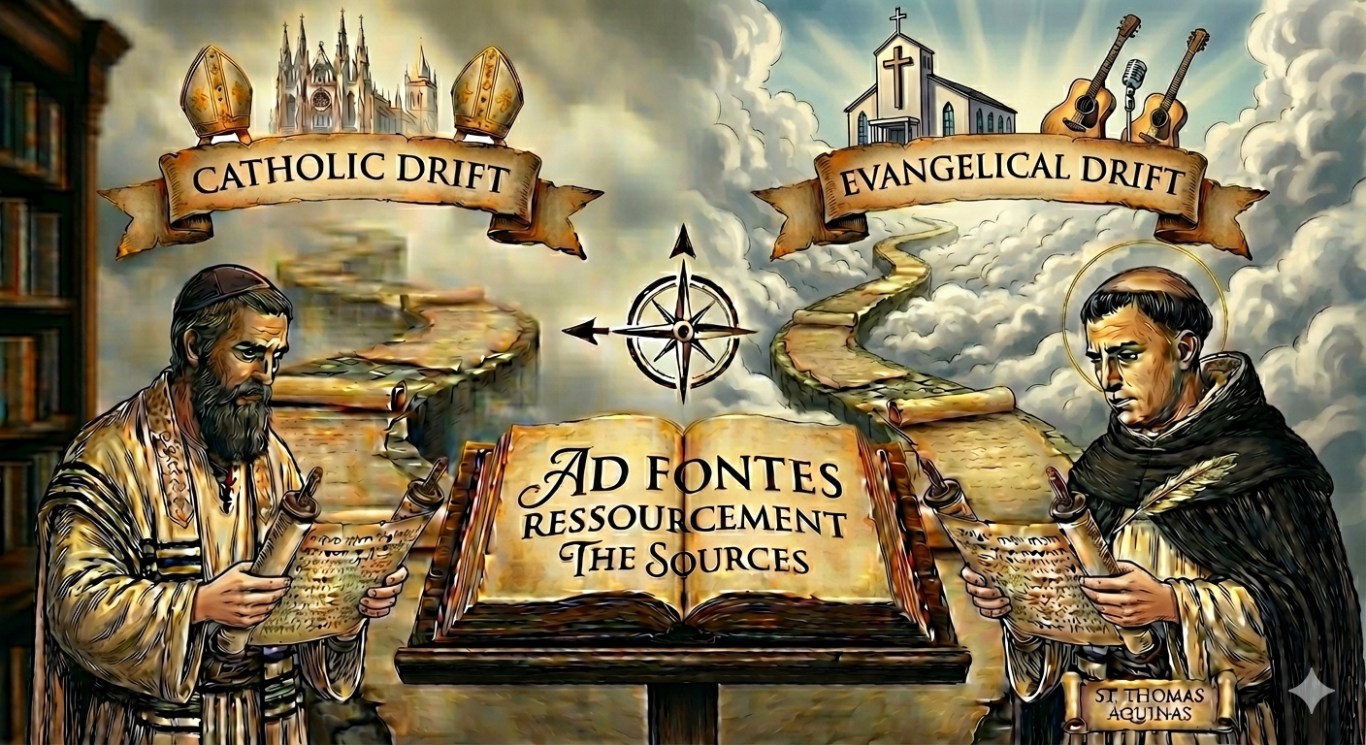
Challenging Catholic & Evangelical Drift
A critique of theological developments within both Catholicism and Evangelicalism. Grounded in a rigorous study of Scripture and Natural Law, this section challenges recent trends and longstanding traditions that deviate from the objective created order and the text of Scripture.
Marian Maximalism and the Norm of Scripture: How the Franciscans Cast Mary in the Holy Spirit’s Role
In the life of the Church, a tension often exists between the precision of theology—specifically, authentic doctrinal criticism rooted in Scriptural study—and the lived piety of the faithful. For many, this reality can be particularly jarring. My own journey in the Catholic Church revealed a profound disconnect between the insights of the Catholic theologians I studied (e.g., Yves Congar, Avery Dulles) and the devotional realities I encountered in the pews.
The Celibacy Error: How Neo-Platonism Hijacked the Christian Family
A major theological tradition that started very early on in the history of the Church held that celibacy was superior to marriage. This was expressed in the Counsel of Trent during the 24th Session in Canon 10. This session took place on November 11, 1563, during the council's third and final period under Pope Pius IV. Its primary focus was a comprehensive reform of the Sacrament of Marriage. The Council of Trent declared that it is better and more blessed to remain in virginity or in celibacy than to be united in marriage,
Recovering a Creation-Affirming Theology of Desire: Deconstructing "Heart Idolatry"
Contemporary Christianity, particularly within Catholic and Evangelical circles, often presents a divided vision of human fulfillment. This division stems from the contrasting legacies of influential theologians, most notably Augustine and Aquinas.² Their differing views on desire, fulfillment, the nature of happiness, and even the ultimate destiny of humanity continue to shape modern debates, impacting how believers navigate their relationship with God, creation, and their own desires.
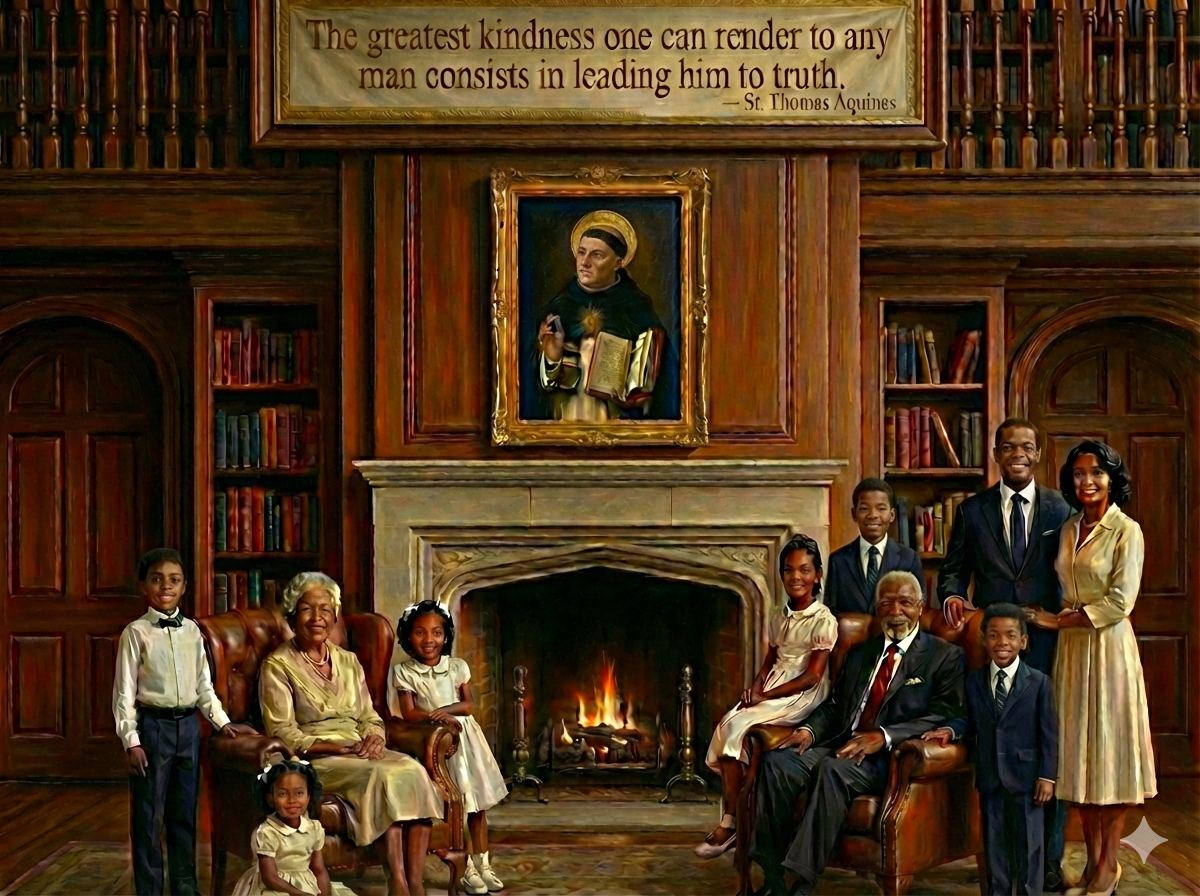
Domestic Order: The Nature of Family & Gender
Exploring the theological and philosophical structures of the home. These articles investigate the distinct roles of men and women, the objective definition of family, and the importance of maintaining structural order and virtue within the household.
I’m White, She’s Mexican, and Dale Partridge is Wrong: A Thomistic View of Marriage
A few days ago, Dale Partridge stated on X, “As a Christian man happily married to a Mexican/Spanish/American woman, I actually agree… Interracial marriage is not the ‘ideal.’”
When I read these words from Dale Partridge, endorsing the view that the “friction” of cultural differences renders unions like mine “sub-optimal,” I recognized the demographic similarity immediately—but I rejected the conclusion entirely. I, too, am a "white" Christian man happily married to a woman born in Mexico. We navigate the exact same cultural waters that Partridge cites. Yet, where he and others see a “complicated reality” that degrades the family ideal, I see a fundamental misunderstanding of what the “Ideal” actually is.
Marriage is Not A Metaphor:
Why the "Picture of Christ and the Church" is Not the Point
Marriage, as instituted by God, serves the fundamental purpose of creating a family. While companionship and mutual support are valuable aspects of marriage, they remain secondary to its primary end: the procreation and raising of children. This perspective diverges significantly from the prevailing Western view, which prioritizes romantic companionship as the foundation of marriage. A novel proposition has gained significant currency: the assertion that the primary telos, or ultimate purpose, of matrimony is to serve as a living symbol of the union between Christ and the Church.
The Myth of the "Smart" Stepfamily: How Christian Experts Normalize Functional Polygamy
Modern ministry often treats the blended family as a puzzle that can be solved with enough patience, therapeutic tools, and 'smart' co-parenting strategies. But before examining the prevailing philosophical and theological advice given to blended families, we must first establish the physical and sociological realities of this family structure.
The argument that the blended family is structurally deficient in achieving the common good is not merely a theoretical abstraction; it is powerfully corroborated by empirical evidence across neurobiology and sociology. Maximum child development and human flourishing are intricately and demonstrably tied to the continued care of the child’s biological mother and father.
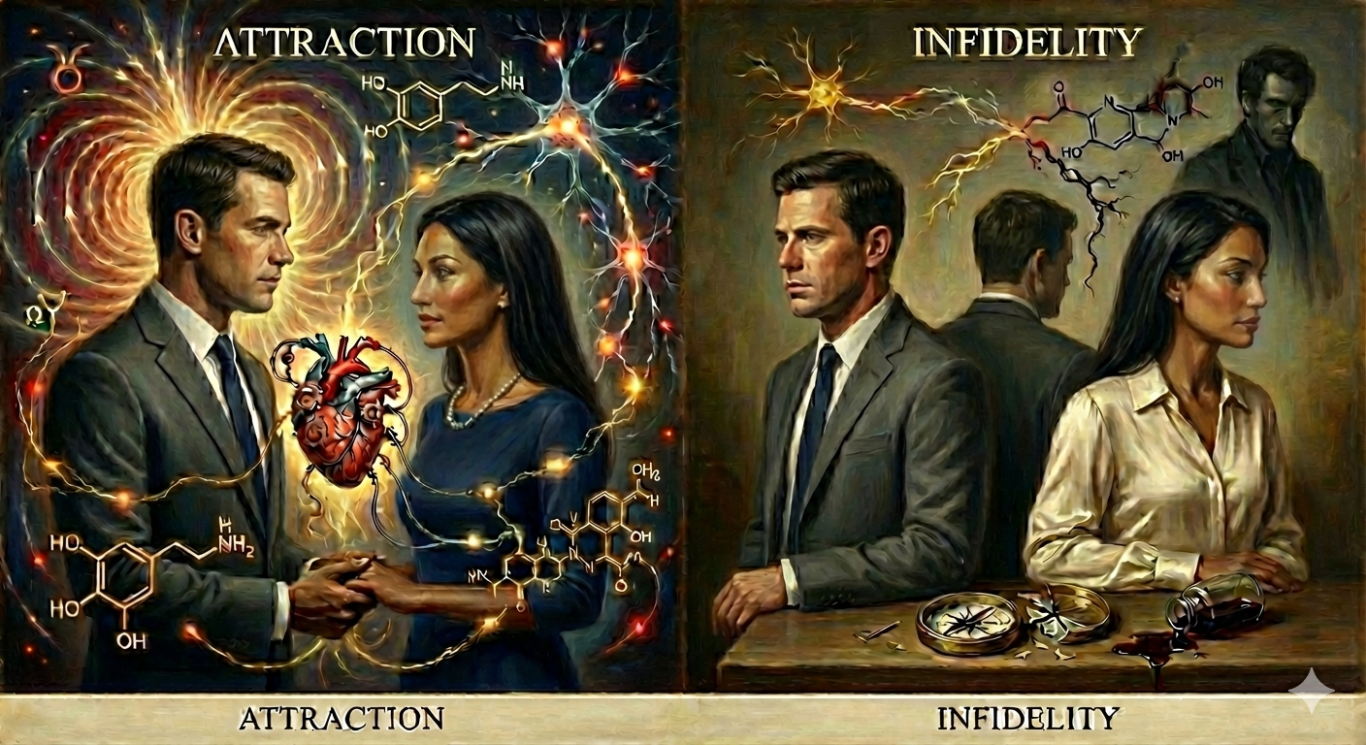
The Science of Attraction & Infidelity
Focusing on the hard science of attraction and how that intersects with infidelity. We look at neurological and biological research to understand the specific roots of infidelity and the friction between biological impulses and the will.
Modesty is Scientific Not Cultural
For decades, we have been told that what we find attractive—and by extension, what we consider "modest"—is merely a social construct. We are taught that standards of beauty are arbitrary and that sexual responses are learned behaviors. However, an examination of the peer-reviewed research suggests a much more provocative reality: human attraction isn't a cultural choice; it is a biological mandate.
The Coworker Infidelity Drift
We have been sold a dangerous myth: the idea that a "happy" marriage is an impenetrable fortress. We are told that as long as we are compatible and fulfilled, our relationships are immune to the contagion of unfaithfulness. But happiness, it turns out, is not a vaccine. In reality, the modern workplace has become a laboratory for a subtle phenomenon: the "Infidelity Drift." While we focus on career advancement, the primordial good of the household is being quietly dismantled by a lack of boundaries and the inescapable dynamics of human biology.